Made and counted by Wren —

Easy Gradient Crochet Toddler Sweater Pattern

Make an easy gradient crochet toddler sweater with a top-down yoke, ruffled hem, and simple stitches. Beginner-friendly and fully size-adjustable.

Easy Gradient Crochet Toddler Sweater Pattern
BeginnerLevel
4-6 HoursTime
4 mmHook
WorstedYarn
Jump to the pattern

At a glance

Chain a short foundation and single crochet across to start the ribbed collar strip.

Work back loop single crochet rows back and forth until the collar reaches the length needed for your toddler's neckline.

Join the collar into a loop, then build the yoke upward with double crochet stitches and evenly spaced increases.

Repeat the increase pattern across several rounds to widen the yoke into shoulders and sleeve openings.

Divide off the two sleeve sections and work them separately in the round to finish the arms.

Continue crocheting the remaining body in the round using simple, repetitive stitches for a straightforward torso.

Add a back post double crochet round to form the ruffle 'flap,' then work increase rows above it to create the ruffled hem.

Weave in all loose ends and seam any remaining openings to complete the toddler sweater.

About this pattern

This gradient crochet toddler sweater is one of those patterns that looks far more impressive than it actually is to make. Worked from a simple collar down through a yoke and into a ruffled body, it uses a self-striping gradient yarn to create soft, flowing color transitions without any color-changing fuss on your part. It's perfect for crocheters who want a quick, wearable gift for a little one, or anyone who loves watching a sweater grow round by round with almost no counting headaches.

The techniques here are refreshingly simple: single crochet, back loop single crochet for that ribbed collar texture, double crochet increases to shape the yoke, and back post double crochet to create the ruffle detailing at the hem. If you can chain, single crochet, and double crochet, you're fully equipped. Most crocheters can complete this in a single afternoon or spread it across two cozy evenings, making it a satisfying, low-commitment project with a big payoff.

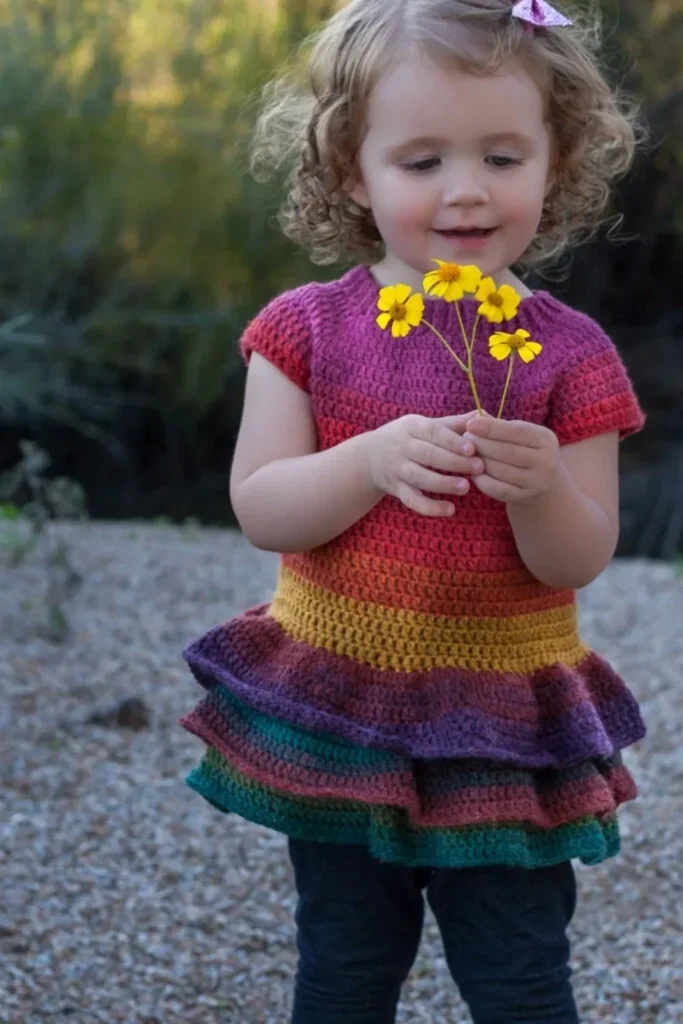
The finished sweater has a relaxed, comfy fit with a soft ribbed collar, gently flared sleeves, and a playful ruffled hem that adds movement and charm. Because the length is fully adjustable, you can size it up as your toddler grows or make it as a dress instead. It's a lovely handmade gift for a birthday, baby shower, or just because — the kind of piece that gets passed down and remembered.

Variations

One of the best things about this sweater is how easily you can make it your own. Swap the gradient yarn for a solid pastel like blush pink, sage green, or buttery yellow for a more classic look, or try a variegated yarn in ocean blues for a completely different vibe than the original warm gradient. If you want a bolder statement piece, pick a gradient that transitions through deep jewel tones instead of soft pastels — think plum to burgundy to rust for a cozy autumn feel. For a coordinating sibling set, work one sweater in the gradient yarn and a second in a solid color that matches one of the gradient's shades. Want a dress instead of a sweater? Simply keep working the body rounds longer before finishing off — the notes confirm this pattern converts easily since the length is fully adjustable. You can also play with the collar: continue the back loop single crochet rows a bit longer for a slouchier, folded-over collar, or stop earlier for a snug crew neckline. If you're making this for a specific size, just adjust your starting chain and stitch counts on the sleeves and body rounds to fit your toddler's measurements, using a fitted sweater or shirt as your guide. For texture lovers, consider adding an extra round or two of back post double crochet along the sleeve cuffs to echo the ruffle detail at the hem. And if you're stashing yarn, this is a wonderful way to use up a partial skein of self-striping yarn that's too small for a full-size project but perfect for tiny toddler proportions.

I adore this pattern because it proves that simple stitches can create something genuinely special. The back loop single crochet collar gives you that ribbed, stretchy edge that looks store-bought, and watching the gradient yarn shift shades round after round feels like a little reward every few minutes. There's something so satisfying about the yoke increases lining up perfectly to shape those sweet little sleeves without any fiddly shaping math. And then there's the ruffle hem — the back post double crochet row creates this perfect little 'flap' that catches the ruffle rows and gives the whole sweater a playful, boutique-worthy finish. It never feels tedious because each part of the sweater — collar, sleeves, body — is its own quick, achievable chunk. I also love that it's endlessly adaptable: same pattern, dress length, different color story, and suddenly it's a whole new piece. Whether you're making it for your own toddler or as a gift, it feels less like following instructions and more like painting with yarn.
Common mistakes

  • Working into the wrong loop for the collar roundsDouble-check you're going into the back loop only for the BLOSC rounds, since this is what creates the stretchy ribbed texture — working into both loops will give a flat, non-elastic collar.
  • Losing track of increase placement in the yoke roundsUse stitch markers at each increase point as the pattern info suggests; this prevents uneven sleeve shaping and keeps your yoke symmetrical.
  • Miscounting the starting chain for the collarChain 6 exactly and single crochet into the second chain from the hook, then recount your 5 single crochets before turning to avoid an off-count collar.
  • Forgetting to chain 1 and turn between collar rowsSince the collar is worked flat in rows, always chain 1 and turn at the end of each row before starting the next back loop single crochet row.
  • Skipping the back post double crochet row before the ruffleThis row creates the foundation 'flap' the ruffles attach to, so don't substitute it with a regular double crochet row or the ruffle won't sit correctly.
  • Not measuring the collar length against the toddler before joiningSince collar length determines sweater size, hold your work against the child's neck and shoulders periodically rather than guessing the total rows.

The pattern

Written out round by round

Materials

  • 2 Skeins of Lion Brand Mandala (or Cupcake yarn for different color variations)
  • Crochet Hook Size G (4mm)
  • Yarn Needle
  • Scissors

Abbreviations

  • CH = Chain
  • SC = Single Crochet
  • BLOSC = Back Loop Single Crochet
  • DC = Double Crochet
  • BPDC = Back Post Double Crochet
  • SLST = Slip Stitch
  • SKST = Skip Stitch

Collar

  1. Round 1Chain 6 to begin.
  2. Round 1Single crochet in the second chain from the hook and in the next 4 chains for a total of 5 single crochets.
  3. Round 264 (or as per the size required): Chain 1 and turn, then back loop single crochet in the next 5 stitches for the length of the collar according to the size you are making.

Sleeves

Make 2

This can be made easier by using stitch markers to highlight the spots where increases should be made.

  1. Round 1Chain 2, double crochet into the next number of stitches as per the size of the sweater, followed by 3 double crochets into the next stitch. Continue the established pattern across the first row, ending with a slip stitch to the first double crochet, adjusting stitch counts according to the chosen size.
  2. Round 2-7Continue to alternate double crochets and strategically placed increases to expand the yoke for forming the sleeves.

Body

With repetitive rows, the pattern continues to craft a comfy, wearable sweater or dress.

The length of the garment is easily adjustable, making it possible to create a unique piece every time.

After completing the yoke, crochet the body of the sweater straightforwardly, adopting a simple stitch pattern.

For the ruffle detailing, crochet a row of back post double crochet followed by rows of increases and regular stitches. This establishes a 'flap' that is perfect for attaching the ruffles.

Assembly

Step 1

With the final stitches and seams in place, your toddler crochet sweater will be ready.

Important notes

Gauge matters less on this project than fit, so try the collar and yoke against your toddler (or a similarly sized garment) as you go rather than relying solely on row counts.

Because the pattern uses a self-striping gradient yarn, your color changes will happen automatically within the skein — no need to carry or join new colors mid-round.

Keep a couple of stitch markers on hand specifically for the sleeve yoke increases; it makes a huge difference in keeping your increases evenly spaced.

The back post double crochet row for the ruffle can feel a little tighter to work than regular double crochet, so don't be afraid to go up a hook size just for that row if your tension feels cramped.

If converting to a dress, simply continue the body rounds to your desired length before finishing — no additional stitch pattern changes are needed.

Weave in ends as you complete each part (collar, sleeves, body) rather than saving them all for the end; it makes assembly faster and less overwhelming.

The pattern can be adjusted to create a dress variation instead of a sweater.

FAQs

Frequently asked questions

What yarn works best if I can't find a gradient skein?

Any smooth worsted weight yarn works well; you can use a solid color or hand-alternate between a couple of coordinating skeins to mimic a gradient effect. Cupcake-style variegated yarns are also a lovely substitute for a similar color-shifting look.

How do I make this sweater bigger for an older toddler?

Extend the starting chain for the collar and add extra rounds to both the yoke and body sections, checking fit against the child as you go. Since the pattern is designed to be size-adjustable, you're simply working more rounds rather than changing the stitch pattern.

Can I turn this into a dress instead of a sweater?

Yes, this pattern converts easily into a dress by continuing the body rounds until you reach your desired length before finishing off. No other changes to the stitch pattern are needed.

Do I need to know how to do back post double crochet?

Yes, it's used for the ruffle detailing row at the hem, but it's a beginner-friendly technique once you get the hang of inserting your hook around the post instead of under the top loops. A quick practice swatch before starting the body will help you feel confident.

How long does this sweater actually take to finish?

Most crocheters complete it in about 4 to 6 hours total, though this varies with size and your personal stitching speed. Since the collar, sleeves, and body are each fairly quick sections, it's easy to break the project into a few short sessions.

One at a time —

Get the next pattern

Tested round by round before it is sent. No spam.