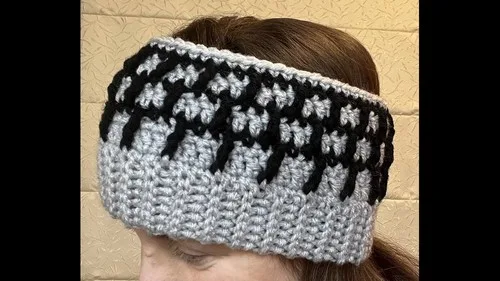
Made and counted by Wren —

Half Double Crochet Slip Stitch Ear Warmer Pattern

I/H (5.5mm) hook, worsted weight (#4) yarn: a ribbed ear warmer with 6 rounds of single and double crochet.

Half Double Crochet Slip Stitch Ear Warmer Pattern
BeginnerLevel
4-6 hoursTime
5.5 mmHook
WorstedYarn
Jump to the pattern

About this pattern

A worsted weight (#4) ear warmer made with an I/H (5.5 mm) hook: a 2-round half double crochet slip stitch ribbing strip is seamed into a loop, then 6 rounds of single and double crochet build the band width. The sample uses 63 stitches per round, a count that must divide evenly by three for the repeats to line up.

This ear warmer starts as a 2-round ribbing strip worked in half double crochet slip stitch, then that strip is seamed into a loop and built up with 6 additional rounds worked around its edge. Row 1 of the ribbing produces 7 half double crochet slip stitches from a starting chain of 8, worked into the back bump. Round 1 of the second part adds single crochets around the loop, with the sample landing on 63 stitches — a number that must stay divisible by three for the pattern to repeat correctly in Round 3.

This pattern uses the unique Half Double Crochet Slip Stitch technique, which creates a ribbed texture that adds warmth and style. You can easily customize the size to fit your head perfectly and experiment with different yarn colors to match your winter wardrobe. It's a great project for beginner to intermediate crocheters looking to add a trendy piece to their collection.
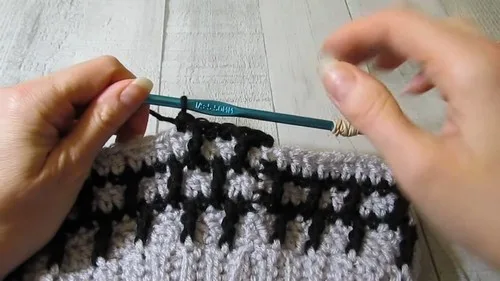
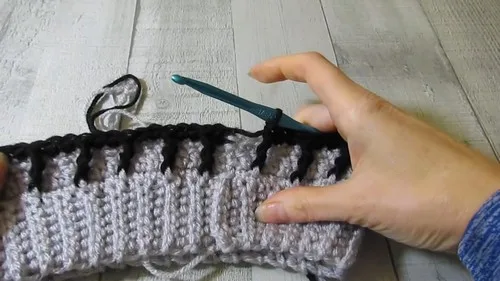
The pattern

Written out round by round

Materials

  • I/H hook or 5.5 mm hook
  • Worsted weight number 4 yarn

Abbreviations

  • ch = chain
  • st = stitch
  • sl st = slip stitch
  • sc = single crochet
  • hdc = half double crochet
  • dc = double crochet
  • fptr = front post triple crochet

Ribbing

Row 1Chain 8. Work a Half Double Crochet Slip Stitch (half slip stitch) in the back bump of the second chain from your hook, and across.Yarn over, insert your hook, yarn over, and pull through all three loops.

You should have a total of 7 half double crochet slip stitches.

Row 2Chain one and turn your work. Slip stitch across in the back loops of your stitches.

You should have 7 slip stitches.

For Row 3: Chain one and turn your work.

Work a half double crochet slip stitch in the back loop of each of the 7 stitches.

Repeat rows 2 and 3 until the ribbing fits comfortably around your head.

End on a half slip stitch row.

The sample uses 63 rows.

Fold the ribbing and slip stitch the ends together to form a circle.

Work in the front loop at the end of row one and the back loop of your last row.

Part 2

Round 1Chain one and single crochet evenly all the way around. Ensure the number of single crochets is divisible by three.The sample uses 63 single crochets.Slip stitch to join.
Round 2Chain one and double crochet in the first stitch and then double crochet all the way around.The sample uses 63 double crochets.
Round 3Repeat round 1. Join with a slip stitch and single crochet all the way around.The sample uses 63 single crochets.
Round 4Chain one, single crochet in the first stitch. Work a front post triple crochet around the single crochet from round one.Single crochet in the next stitch.Repeat single crochet, front post triple crochet, single crochet all the way around.Join with a slip stitch.
Round 5Chain one and double crochet all the way around. The sample uses 63 double crochets.
Round 6Chain one, single crochet in the first two stitches. Work a front post triple crochet around the single crochet from round four.Single crochet in the next two stitches.Repeat single crochet, single crochet, front post triple crochet all the way around.
Round 7Repeat round 5. Double crochet all the way around.
Round 8Chain one, single crochet in the first stitch. Work a front post triple crochet in the next stitch around the single crochet from round six.Single crochet in the next stitch.Repeat single crochet, front post triple crochet, single crochet all the way around.
Round 9Single crochet all the way around.Cut and fasten off your yarn.

Tester's notes

7 half double crochet slip stitches across Row 1 sets the ribbing width; recount before Row 2 to confirm the chain of 8 produced exactly 7 stitches worked into the back bump.

2 rounds of ribbing form the entire headband strip before it is seamed into a loop and used as the base for Part 2.

63 single crochets in Round 1 of Part 2 is the sample count; any multiple of three works, but the number must stay divisible by three through Round 3's repeat.

I/H (5.5 mm) hook is sized for worsted weight (#4) yarn; swapping to a different yarn weight without resizing the hook changes how close the stitch count lands to 63.

6 rounds make up Part 2, worked onto the ribbing's long edge; place a stitch marker at the seam before Round 1 so the slip-stitch join lands in the same spot in every round.

Size and color are customizable: add or remove ribbing rows to fit your head, and choose any worsted weight (#4) yarn color to match your wardrobe.

Work in progress

Half Double Crochet Slip Stitch Ear Warmer Pattern — photo 2
Half Double Crochet Slip Stitch Ear Warmer Pattern — photo 3

At a glance

Rounds11
Parts2
LevelBeginner
Time4-6 hours
Hook5.5 mm
YarnWorsted

Gauge check

After Round 1 of Part 2, count the single crochets around the band; the total must be divisible by three for the stitch pattern in later rounds to line up, with 63 the sample count.

If the number is off, add or subtract single crochets evenly around the loop before starting Round 2's double crochet row.

If something looks wrong

The ribbing strip twists instead of lying flat.
Row 2's slip stitches go through the back loops only; working through both loops pulls the band off-grain, so rip back to Row 1 and recheck which loop is caught.
The stitch count in Part 2 Round 1 isn't divisible by three.
Single crochets were added unevenly around the ribbing loop; redistribute by adding or skipping one stitch at the seam until the total (63 in the sample) is a multiple of three.
Round 3 single crochets don't line up with Round 1.
Round 3 repeats Round 1's placement, so a miscount in Round 2 shifts everything; recount Round 2's double crochets first and correct that round before continuing.
The finished ear warmer is too tight or
The starting chain of 8 fixes the ribbing's width, but the number of rows is adjustable; add or remove ribbing rows before seaming the loop, which changes circumference without affecting the 63-stitch counts in Part 2.

Yarn substitutions

Acrylic, worsted weight (#4)Matches the pattern's weight, so the I/H (5.5 mm) hook and 63-stitch count carry over unchanged; expect a stiffer hand and less drape than wool.
Wool-blend, worsted weight (#4)Same I/H (5.5 mm) hook and stitch counts apply; the ribbing stretches more and recovers its shape better after being pulled over the head.
Wool or acrylic, chunky weight (#5)Requires a larger hook than I/H (5.5 mm); fewer stitches are needed to reach a comparable circumference to the 63-stitch sample, and the finished band is thicker and warmer.
FAQs

Questions

Can the stitch count change from 63?

Yes. 63 is the sample size for an average head circumference, and any total divisible by three works for Round 1 of Part 2 since Round 3 repeats that same structure.

What if the back bump is hard to find on Row 1?

Turn the starting chain of 8 so the bumps face up before working the half double crochet slip stitch into the second chain from the hook. Good light on the chain row makes the bump easier to isolate before completing all 7 stitches.

How does the ribbing strip become the base for Part 2?

The 2-row ribbing strip is worked to the desired length, then its short ends are seamed together into a loop. Round 1 of Part 2 is then worked directly into that long edge, picking up the 63 single crochets evenly around with the same I/H hook.

One at a time —

Get the next pattern

Tested round by round before it is sent. No spam.