Made and counted by Wren —

Crochet Lotus Bloom Dishcloths Pattern

Learn to crochet the Lotus Bloom Dishcloth with layered petals and a textured center circle—an easy, gorgeous project for beginners and pros alike.

Beginner-FriendlyLevel
2-3 HoursTime
4.0 mmHook
WorstedYarn
Jump to the pattern

At a glance

Begin by working the Center Circle over two rounds to create a small, flat foundation disc.

Place a stitch marker at the start of each round so you never lose track of where you are.

Move into Step 2 and build the First Layer of Petals over two rounds directly onto the center.

Keep your increases evenly spaced so the emerging petals lie flat instead of cupping or curling.

Continue into Step 3, adding the Outer Petals over two more rounds for extra depth and texture.

Check your tension between rounds to keep the layered petal shape consistent and balanced.

Fasten off and weave in all ends securely along the back of the petal layers.

Lightly block the finished piece, pinning the petal points outward so the lotus shape holds its form.

About this pattern

The Lotus Bloom Dishcloth transforms an everyday kitchen essential into a piece of handmade art. Built up in layers—starting with a tidy center circle and blooming outward into two full rounds of petals—this design captures the graceful, symmetrical beauty of a lotus flower in cotton yarn. It's perfect for crocheters who love working in the round and want a project that feels decorative but stays genuinely functional at the sink.

This pattern relies on classic in-the-round techniques: starting with a small center round, increasing evenly to keep your circle flat, and then building petal layers that flare outward for texture and dimension. Because it's worked in just three main steps across six total rounds, it's approachable for confident beginners while still offering enough shaping interest to keep experienced crocheters engaged. Expect to spend somewhere around one to two hours from start to finish.

When you tie off your last stitch, you'll have a soft, textured dishcloth with a scalloped, flower-like silhouette that's as pretty draped over a faucet as it is scrubbing dishes. The layered petals give it wonderful absorbency and a lovely tactile feel in hand. Made in a favorite color or a whole rainbow set, these little blooms make thoughtful housewarming gifts, bridal shower favors, or a cheerful treat for your own kitchen.

Variations

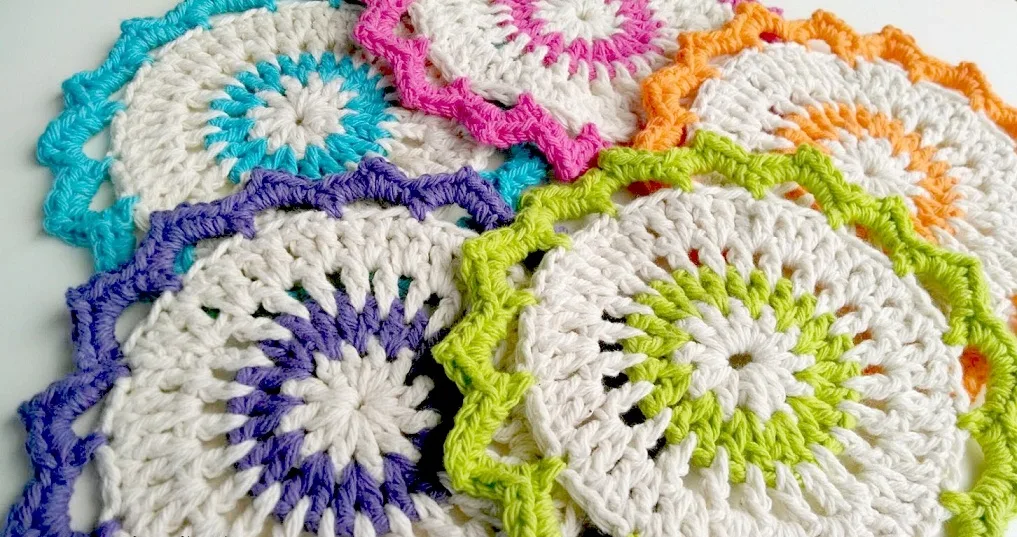
One of the best things about the Lotus Bloom Dishcloth is how endlessly customizable it is with just a few tweaks. For a spa-inspired set, try soft sage green for the center circle with a cream or ivory for both petal layers—it gives a serene, botanical look that pairs beautifully with a farmhouse kitchen. For a bold statement piece, work the center circle in a bright coral or sunshine yellow and let the outer petals fade into white for a true blooming-flower effect. Lily Sugar'n Cream and Paintbox Yarns Simply Cotton both offer huge color ranges perfect for this kind of contrast play. If you want a slightly larger finished cloth, work one extra round of double crochet between the First Layer of Petals and the Outer Petals step, spacing increases evenly to keep the piece lying flat—just watch that your stitch count stays consistent round to round so the petals don't pucker. For a smaller, coaster-sized version, simply stop after completing Step 2 (the First Layer of Petals) and finish with a simple slip stitch border instead of adding the outer round. Seasonal color swaps are another fun way to change things up: try a soft pink center with deeper rose petals for a springtime feel, or rich burgundy and burnt orange for an autumn kitchen refresh. You could also alternate colors between the two petal rounds instead of the center, giving the piece a two-toned pinwheel effect rather than a solid gradient. For gift-giving, consider making a matching set of three in a coordinated palette—one for the sink, one for the counter, and one to tie with ribbon as a hostess gift. However you style it, this pattern takes color changes beautifully thanks to its distinct, separate rounds.

There's something so satisfying about watching a flat little center circle blossom into a full, dimensional flower right in your hands. I love how this pattern builds in clear stages—first you anchor everything with the Center Circle, then you form that First Layer of Petals that starts giving the piece its signature ruffled edge, and finally the Outer Petals round finishes it off with even more depth and texture. Each layer feels like its own small victory, which makes the whole project feel faster than it actually is. It's also incredibly practical: cotton yarn means this cloth will actually hold up to real kitchen duty, not just look pretty on a shelf. I especially love that the petal construction hides tension wobbles better than a plain single crochet dishcloth would—so even if your stitches aren't perfectly uniform, the finished piece still looks polished and intentional. Whether you're making one as a quick gift or a whole stack for your own home, there's a rhythm to the increases and petal rounds that becomes almost meditative once you get going. This is the kind of pattern you'll want to make again and again in different colors.
Common mistakes

  • Starting the Center Circle too looselyPull your starting loop snug before working your first round of stitches, and give the tail a firm tug once the round is complete to close any gap completely.
  • Losing track of which round you'rePlace a stitch marker at the start of each new round and move it up as you go—this is especially helpful since the pattern shifts in stitch pattern between steps.
  • Petals curling or cupping instead of lying flat.This usually means your increases aren't evenly distributed. Count your stitches at the end of each round in Steps 2 and 3 to make sure your petal repeats are spaced consistently around the circle.
  • Working the Outer Petals too tightlyTry to keep your tension consistent throughout, but if you notice the outer round pulling the whole piece inward, size up your hook slightly just for that final step.
  • Choosing a slippery or synthetic yarn instead of cotton.Stick with a medium-weight cotton yarn as suggested—it holds its shape better for the petal structure and gives the finished dishcloth the absorbency it needs for real kitchen use.
  • Weaving in ends too loosely on the back of the petals.Since the layered petal texture can hide stitches easily, run your yarn tail through several stitches in different directions before trimming to make sure it won't work its way loose with washing.

The pattern

Written out round by round

Materials

Yarn

  • Cotton yarn is ideal for dishcloths because of its durability and absorbency. Choose medium-weight, worsted yarn for best results.

Crochet Hook

  • A 4.0mm to 5.0mm hook (size G or H) works well with medium-weight yarn.

Stitch Markers

  • These help keep track of rounds and sections.

Tapestry Needle

  • For weaving in ends and creating a polished finish.

Scissors

  • For trimming yarn ends.

Abbreviations

  • ch = Chain
  • sc = Single Crochet
  • dc = Double Crochet
  • sl st = Slip Stitch
  • rep = Repeat
  • sp = Space
  • yo = Yarn Over

Step 1: Create the Center Circle

Magic Ring : Begin with a magic ring, which will allow the center of your dishcloth to close tightly.

  1. Round 1Work 12 dc into the ring, pull tight to close, and join with a sl st to the first dc.
  2. Round 2Work 2 dc in each st around (24 sts), joining with a sl st at the end.

Step 2: Form the First Layer of Petals

  1. Round 3Ch 3 (counts as the first dc), then work 2 dc in the next stitch, skip 1 stitch, and sl st in the following stitch. Repeat around to create a petal-like pattern.
  2. Round 4Ch 2, work a sc in each dc and sl st around for a base round.

Step 3: Create the Outer Petals

  1. Round 5For larger petals, work 3 dc in each sp , ch 1, skip the next sp, and continue around.
  2. Round 6Work sc into each st, joining with sl st. This round adds texture and keeps the petal shape prominent.So, pick up your hook, choose your colors, and enjoy crafting these lovely Lotus Bloom Dishcloths!

Cotton yarn is highly recommended as it’s durable, absorbent, and holds up well with repeated washing. Acrylic yarn isn’t ideal for dishcloths as it doesn’t absorb water well, but it can work for decorative purposes. Depending on your crochet speed and experience level, it typically takes 1-2 hours per dishcloth.

Crocheting Lotus Bloom Dishcloths is an enjoyable, creative way to add a personal touch to your kitchen or give as thoughtful gifts. With just a few materials and some simple stitches, you can create beautiful, functional pieces that bring a touch of nature-inspired elegance into any space.

Important notes

💡 Use a 4.0mm to 5.0mm hook (size G or H) to match your worsted-weight cotton yarn—too small a hook can make the petal rounds feel stiff and hard to work into.

💡 Place a stitch marker at the beginning of every round, especially when moving from the Center Circle into Step 2, so you always know exactly where each new round starts.

💡 Cotton yarn has less stretch than acrylic, so keep an eye on your tension in the petal rounds—stitches worked too tightly can make the flower cup instead of lying flat.

💡 Block your finished dishcloth by lightly wetting it and pinning the petal points outward to dry—this helps the lotus shape hold its form beautifully.

💡 If you're making a set, use a yarn needle to weave in ends as you finish each round rather than saving them all for the end—it keeps the layered petal texture clean and tangle-free.

💡 Keep your scissors handy for trimming yarn tails close after weaving them in, especially around the petal edges where stray fibers are more noticeable.

FAQs

Frequently asked questions

What yarn works best for the Lotus Bloom Dishcloth?

Medium-weight worsted cotton yarn is ideal because it's durable and highly absorbent, which matters since this is a working kitchen dishcloth. Cotton also holds the petal shapes better than acrylic, keeping your lotus flower looking crisp.

How long does this pattern take to complete?

Most crocheters finish in about one to two hours since the pattern only has three main steps across six total rounds. It's a great project for an evening or a quiet afternoon.

Is this pattern good for beginners?

Yes, it's very approachable for beginners who are comfortable working in the round and doing basic increases. The clear step-by-step structure—Center Circle, First Layer of Petals, Outer Petals—makes it easy to follow without getting lost.

Can I make this dishcloth bigger or smaller?

Absolutely—stopping after the First Layer of Petals gives you a smaller, coaster-sized piece, while adding an extra evenly-increased round before the Outer Petals step will make it larger. Just be sure to keep your stitch count balanced so the flower still lies flat.

What hook size should I use?

A 4.0mm to 5.0mm hook (size G or H) pairs well with medium-weight worsted cotton yarn for this pattern. If your petals feel too tight or stiff, sizing up slightly can help them lie smoother.

One at a time —

Get the next pattern

Tested round by round before it is sent. No spam.