Made and counted by Wren —

Triangle wrap shawl pattern with a six-row shell repeat

US J/6mm hook, worsted #4 yarn: triangle shawl grown through a six-row shell repeat.

Triangle wrap shawl pattern with a six-row shell repeat
IntermediateLevel
6-10 hoursTime
6 mmHook
Worsted (#4)Yarn
Jump to the pattern

About this pattern

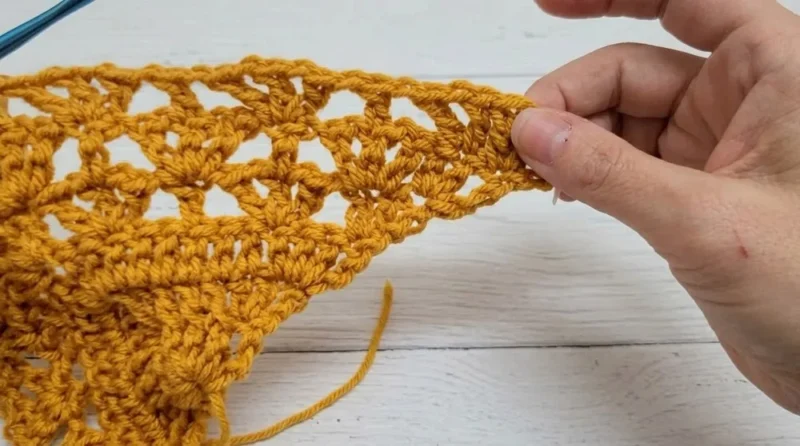
This is a top-down triangle shawl built from a chain-5 ring and worked flat in a six-row repeat (Rows 2–7) of dc, tr, fpdc, and shells. Size is fully adjustable by repeat count; the sample uses 39 rows, a US J/6mm hook, and worsted #4 yarn at approximately 800 yards. Stopping after a Row 2 and Row 3 keeps the top edge straight.

This triangle shawl works flat from a center chain-5 ring, growing point-down through a six-row repeat (Rows 2–7) built from dc, tr, fpdc, and ch-1 shells. Each repeat adds a symmetric panel on either side of a fixed ch-2 center space, so total row count controls the finished size directly — the sample shown runs 39 rows, ending after a Row 2 and Row 3 for a straight top edge. Hook size (US J/6mm) and yarn choice both shift dimensions, so the approximate 800-yard baseline moves with them.

The pattern

Written out round by round

Materials

Yarn

  • Medium (worsted) weight #4 (e.g., Mary Maxim Value Yarn, 100% acrylic, approx. 800 yards needed)

Color used

  • Yellow (or color of choice)

Hook

  • US Size J / 6 mm crochet hook (or hook size recommended for your chosen yarn to achieve desired drape)

Optional

  • Scissors, tapestry needle for weaving in ends, stitch markers

Abbreviations

  • ch = chain
  • sl st = slip stitch
  • sc = single crochet
  • dc = double crochet
  • tr = triple crochet
  • fpdc = front post double crochet
  • shell = (dc, ch 1, dc, ch 1, dc) all in same stitch
  • half shell = (dc, ch 1, dc) all in same stitch

Start

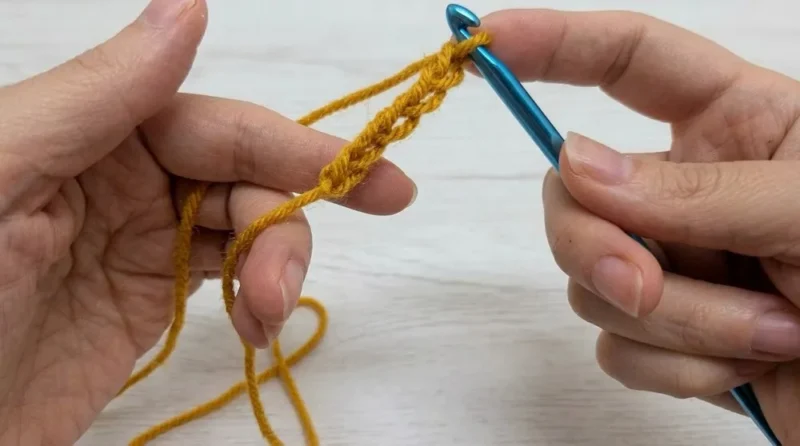
Make a slip knot and chain 5. Join with a sl st to the first chain to form a ring.

Round 1Ch 4 (counts as a tr throughout pattern),

Into the ring

3 dc ch 2 (center point of the shawl)

3 dc 1 tr Turn.

Round 2(Repeat Row 1, counts as Row 1 of repeat) Ch 4 (counts as tr), turn. In first stitch, 2 dc .fpdc in each stitch until you reach the ch-2 center space. In ch-2 space: 2 dc, ch 2, 2 dc. fpdc in each stitch until last stitch. In top of turning ch-4: 2 dc, 1 tr.
Round 3Ch 4 , turn. In first stitch, 2 dc . dc in each stitch to ch-2 space. In ch-2 space: 2 dc, ch 2 , 2 dc.dc in each stitch until last stitch. In top of turning ch-4: 2 dc, 1 tr.
Round 4Ch 4 , turn. In first stitch, 2 dc . [Chain 1, skip 2, shell in next stitch]: Shell = dc, ch 1, dc, ch 1, dc in same stitchRepeat: ch 1, skip 2, dc in next, then ch 1, skip 2, shell in next. Continue this alternating sequence until 2 stitches remain before the center point. DO NOT chain 1 after last shell before point. In ch-2 space: 2 dc, ch 2, 2 dc. Mirror the sequence on the other side: [skip 2, shell] ch 1, skip 2, dc ch 1, skip 2, shell. Continue as established. Last stitch: In turning ch-4, 2 dc, 1 tr.
Round 5Ch 4 , turn. In first stitch, 2 dc . Skip 1 st ; shell in next. Do not ch 1 after this shell.Repeat: ch 1, dc in middle dc of shell; ch 1, shell in next single dc. Continue until last shell before center point. ch 1, skip 1, shell in next (last shell before center). DON'T ch 1 after last shell. In ch-2 space: 2 dc, ch 2, 2 dc. Mirror sequence on other side as established. Last stitch: In turning ch-4, 2 dc, 1 tr.
Round 6Ch 4 , turn. In first stitch, 2 dc . Double crochet, ch 1, double crochet in next stitch ( half shell ).Repeat: ch 1, dc in middle dc of shell; ch 1, shell in next single dc. Continue to last half shell before center point. ch 1, skip 2, half shell in last st before center. Don't ch 1 after last half shell. In ch-2 space: 2 dc, ch 2, 2 dc. Mirror sequence on other side as established. Last stitch: In turning ch-4, 2 dc, 1 tr.
Round 7Ch 4 , turn. In first stitch, 2 dc . dc into each dc and chain-1 space EXCEPT chain-1 spaces within shells/half shells.Skip chain-1 spaces of shell/half shell, only dc in chain-1 spaces between, and in dc stitches themselves. In ch-2 space: 2 dc, ch 2, 2 dc. Mirror sequence on other side. Last stitch: In turning ch-4, 2 dc, 1 tr.Rows 2–7 form your repeat. Repeat Rows 2–7 until shawl reaches desired size. (Sample shown with 39 rows; end after a Row 2 and Row 3 for a neat finish.)Row 7 clarification: Only put dc in chain-1 spaces that are between shells, not within shells. Always check your stitch count at each row point; both sides should mirror. Read each row carefully, especially for where you skip chain spaces. Single repeat may seem complex, but it becomes intuitive quickly. Use stitch markers if it helps mark center or repeats.
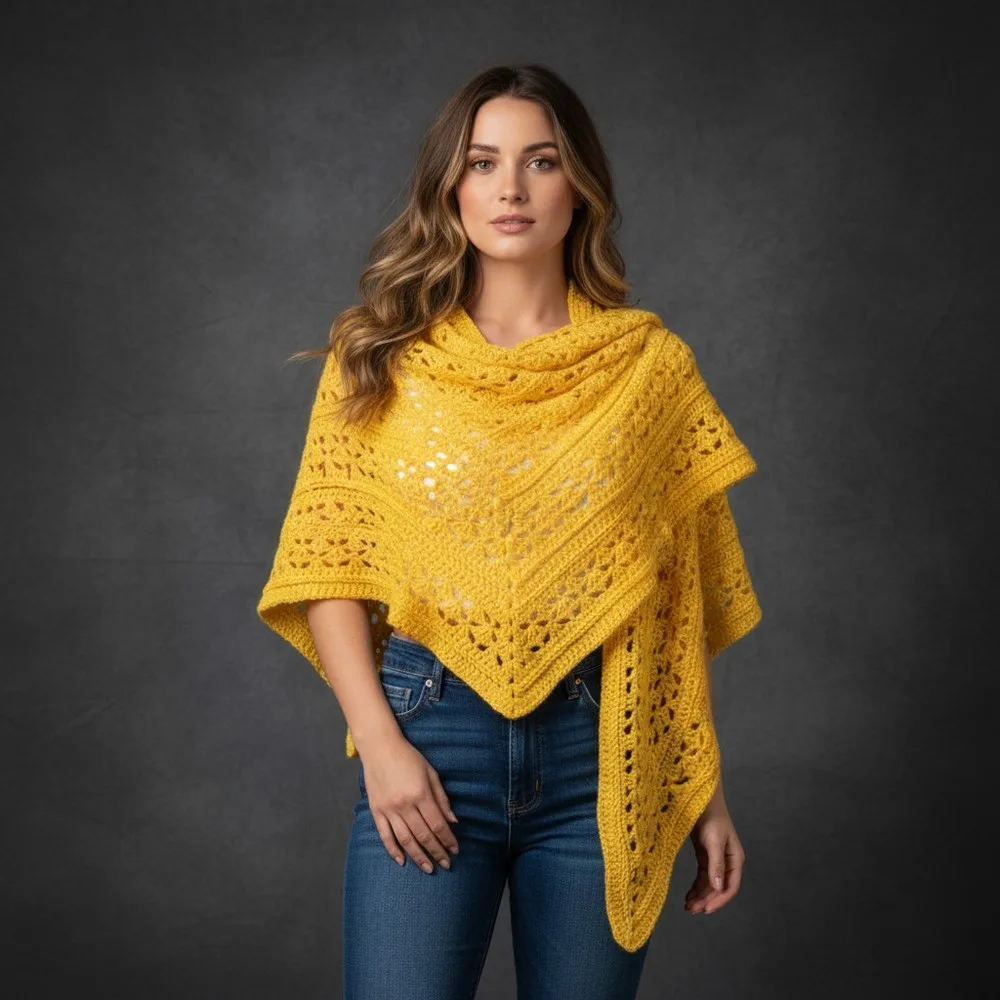
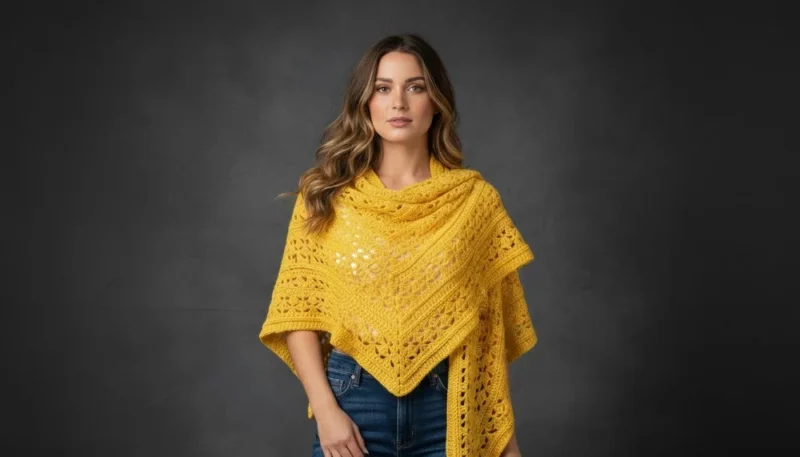
Conclusion This triangle shawl builds on simple stitches (dc, tr, fpdc, and shells) and is customizable in size, color, and yarn. The six-row repeat (Rows 2–7) creates beautiful texture and structure. Don’t worry if it feels tricky at first—the pattern “clicks” once you complete a single repeat.

Assembly

Step 1Optionally edge top of shawl with sc, picot, or fringe as desired.
Step 2Weave in ends.

Tester's notes

US J/6mm hook is the pattern's stated size; sizing up loosens drape, sizing down produces a denser, less lacy fabric.

800 yards of worsted #4 is the approximate amount for the 39-row sample; fewer rows use proportionally less.

6-row repeat (Rows 2–7) is the section to track with a stitch marker — mark the start of Row 2 in each repeat so the six rows don't get miscounted mid-project.

39 rows is a sample size, not a fixed target; stop at any point after completing a Row 2 and Row 3 for a straight, unbiased top edge.

Color changes join cleanly at the start of Row 2, where the turning ch-4 hides the break; changing mid-row through fpdc stitches shows the join.

Gauge is not critical for this shawl pattern.

This pattern begins with a top-down construction and increases at the center for the triangle shape; all repeat rows build upon the previous row, making the shawl wider.

You can customize yarn and hook size; adjust yardage accordingly, and finish the top edge with fringe, picots, or a border as desired.

Use a larger hook for more drape; lightweight yarns yield a delicate shawl, while heavier yarns make it extra warm and cozy.

Count stitches and rows for symmetry, and block your finished shawl to enhance stitch definition.

Work in progress

Triangle wrap shawl pattern with a six-row shell repeat — photo 2
Triangle wrap shawl pattern with a six-row shell repeat — photo 3
Triangle wrap shawl pattern with a six-row shell repeat — photo 4

At a glance

Rounds7
Parts2
LevelIntermediate
Time6-10 hours
Hook6 mm
YarnWorsted (#4)
FAQs

Questions

How is the finished size controlled?

Finished size depends entirely on how many six-row repeats (Rows 2–7) get worked; the sample stops at 39 rows. Ending after a Row 2 and Row 3 keeps the top edge straight, so plan the final repeat around that pairing rather than a fixed row count.

Does this pattern give exact yardage for different sizes?

The materials list gives one figure: approximately 800 yards of worsted #4 for the 39-row sample shown. Smaller versions use less yarn; check what remains every few repeats rather than relying on a single total.

What hook size gives the best drape?

The pattern specifies a US J/6mm hook for worsted #4 yarn. Moving up a hook size loosens the fabric for more drape, while moving down produces a denser, firmer shawl at the same yarn weight.

One at a time —

Get the next pattern

Tested round by round before it is sent. No spam.